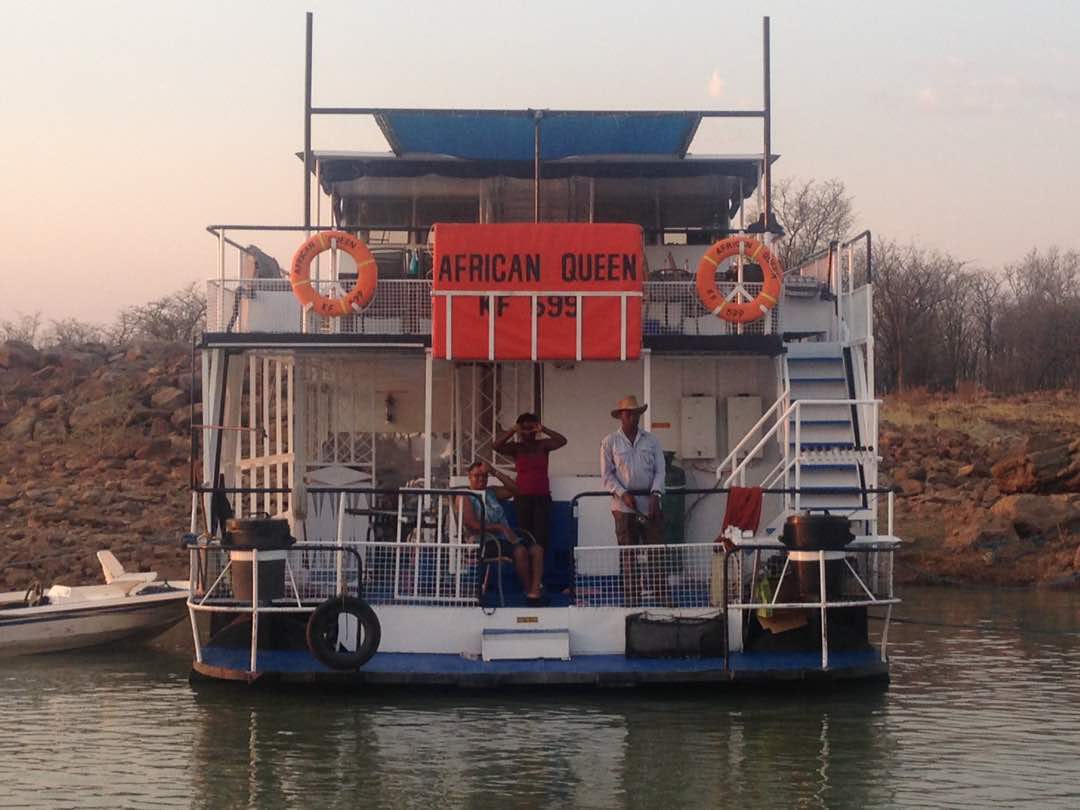
In October last year I was spoiled rotten by my fishing colleagues, Forbes Chiweshe, Charles Magumise and Tsvangirayi Mukwazhi who invited me to Zimbabwe on an all expenses paid fishing trip to Africa’s largest man-made water reservoir, Lake Kariba.
Tsvangirayi bought me a return ticket to Harare on British Airways, while Charles and Forbes transported me from Harare to Kariba and also took care of the cost of hiring a house boat for two nights as well as providing first class food and drinks for the entire trip.
I left OR Tambo on an evening flight on a Friday, and after a few hours’ sleep at Tsvangirayi’s house in Hatfield, we were on our way to Kariba in the early hours of Saturday, in a convoy of two cars. The only women in the group of seven were wives of Charles and Forbes.
We all left from Forbes’ house in Marlbrough at about 4.30am, and stopped voluntarily only twice – the first stop to by fishing worms and the second to buy drinks, while the rest of the numerous stops were at police roadblocks, a feature for which Zimbabwean roads had become notorious during dictator Robert Mugabe’s rule.
On arrival in Kariba which is over 300km from Harare, our first assignment was to buy food and drinks from a local supermarket. I must say the amount of beer that was purchased was as if we were going to supply a tavern, and not for people going on a fishing trip. An equally impressive amount of food items was bought.
Kariba, which is on the Zambezi river, is probably the dam with the highest number of crocodiles in Southern Africa – and these are human eating crocs.
After the shopping, we left in the sweltering heat for our houseboat, a beautiful well looked after facility which was to become our home for two nights and three days. The temperature was to hit a maximum of 38 degrees on that day.
Coming along with the houseboat was a crew of three young men and two small boats on which we were to make our fishing escapades from the houseboat.
Kariba, which is on the Zambezi river, is probably the dam with the highest number of crocodiles in Southern Africa – and these are human eating crocs. So before we even got onto the houseboat, our rather humorous captain gathered us together for house rules. Rule number one was that: “Thou shalt not swim in Kariba waters whatsoever unless you want to commit suicide and have a funeral where there will be no body to be viewed.”
He said even in the docking area which some people might believe to be safe, there were crocodiles. He informed us that just the day before (Friday) a fisherman had been attacked and killed by a crocodile while doing bank fishing in the company of seven colleagues.
At Lake Kariba it is not advisable to do bank fishing alone, but in groups of at least eight fishermen so that the large number of people deters away crocs. However it is not uncommon that a crocodile will snatch a fisherman from the closely knit group of fishermen as had just happened a day before our arrival.
Once on board our five bedroom houseboat, we set sail for Antelope island which happens to be one of the nearest islands from Mahombekombe harbour. We spent our first night docked at Antelope island. I was shocked by the number of crocodiles in the waters around the island. One could see croc heads above the water in every direction.
When I asked the captain whether the crocodiles were not scared of the boat and people to come so close, he said the crocs were attracted to boats by the silly habit of some people of throwing food into the water. After anchoring the houseboat, it was time to go out fishing in the small fishing boats.
As we were fishing, a huge hippo suddenly appeared from underneath the water and opened its mouth wide.
We went to another island just about a kilometre away and used only one fishing boat as the women had chosen to stay behind. It took us no less than an hour to find an ideal place which did not have too many obstacles on which our lines would get entangled. As we were fishing, a huge hippo suddenly appeared from underneath the water and opened its mouth wide.
There was great panic amongst us, but the hippo had no interest in us and submerged, only to come out again with a mouthful of grass. One of the boat crew members who was piloting the small fishing boat said by opening its mouth wide, the hippo was deliberately displaying its arsenal (huge teeth) and warning us to keep away from where it was grazing.
By the time it emerged for the second time, our guide had already switched on the engine and was raving the engine loudly to frighten the hippo away, just in case it had other ideas. However, the hippo kept submerging and emerging with a mouthful of grass each time.
Around sunset, after catching a few breams each, some of them an impressive size, we needed no encouragement to go back to our houseboat as mosquitoes had started patrolling for blood donors.
Back at the boat we wined and dined in style as there was abundant food and drink, including some very expensive whiskeys – some of which I had brought on a recent trip to the United States. Honestly that was my only contribution on this trip as my friends did not want me to buy any food or drink. They said they were revenging my hospitality to them the previous year when I had invited them to South Africa and we had a wonderful time at Loskop dam.

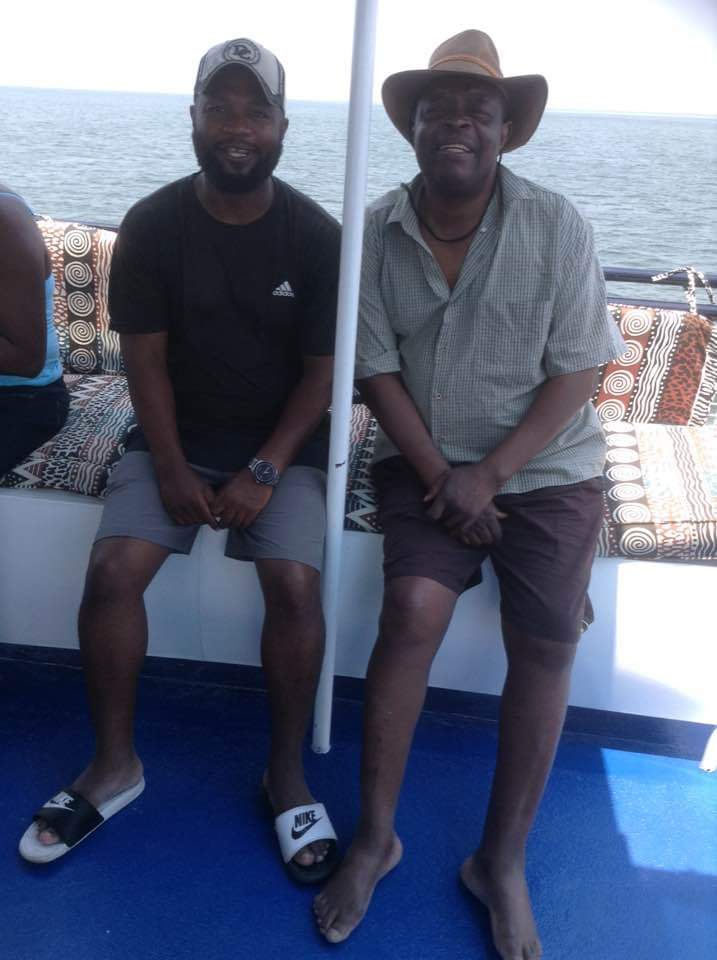
Before going to bed well after midnight, we all agreed that we would leave for our morning fishing at 5.30am, and then come back to the houseboat for breakfast, but this later proved to be all talk and no action as the beers, wine and whiskey had taken their toll. The crew was up at the agreed time, only to be greeted by silence as we were all asleep. Among my friends I was the first to wake up, something I attributed to the fact that I was the only one who had not taken whiskey the night before. I then suggested to the chef that he go ahead with making breakfast.
Before we retired to bed the previous night, Charles had said if he was still asleep by the time others woke up, no one should wake him up because he was on holiday and that on his agenda, fishing was secondary to having a good rest. I said amen to that.
After breakfast we went back to the spot where had fished the previous day as we had invested some of our masese (residue from traditional beer) at the spot. We did not regret the decision as we court some nice breams. Charles who seemed to have had one too many the previous night did not come with us on the morning fishing excursion.
He decided to just chill by the houseboat, but being the keen fisherman that he is, he decided to set up one fishing rod in the hope that if he left his line in the water, he might catch a big bream – his favourite fish. As he was taking a puff, his unattended rod was violently pulled into the water and his reaction not fast enough to save it.
His guess is that it must have been taken by a huge babel as there are plenty monster babels on Lake Kariba. When we arrived from our fishing excursion, we found Charles counting his loss – a brand new Shimano 4000 reel and an Abu Garcia rod, not to mention the nylon line and hook.
Around 11am, we started off for our next destination – Gachekache river mouth. This was a long trip by houseboat standards. On arrival at Gachekache, I immediately christened it the headquarters for poachers as there were poachers all over, laying their nets from their dug-out canoes, seemingly oblivious of the many crocodiles that criss-crossed the waters. They also laid their nets dangerously close to hippos.
At Gachekache river mouth, Tsvangirayi was to become the second person I know to have caught a crocodile by fishing line.
After anchoring our houseboat at a spot we were going to call home for the night, we proceeded as usual in one the small fishing boats, scouting for areas where we could find fish. We decided to anchor at some place not too far away from a head of hippos. This was after our number one theorist Charles had suggested that there would plenty breams close to where hippos stayed, his argument being that the breams came to feed on hippo dung.
Besides the hippos, there were crocodiles all over and indeed we caught a few impressive breams each on worms at this spot, rather confirming Charles’ theory that big breams are found where there are hippos and crocodiles. Tsvangirayi then caught a relatively big fish, but as he was reeling it in, his line suddenly came to a halt, leading him to believe that he had hooked an obstacle.
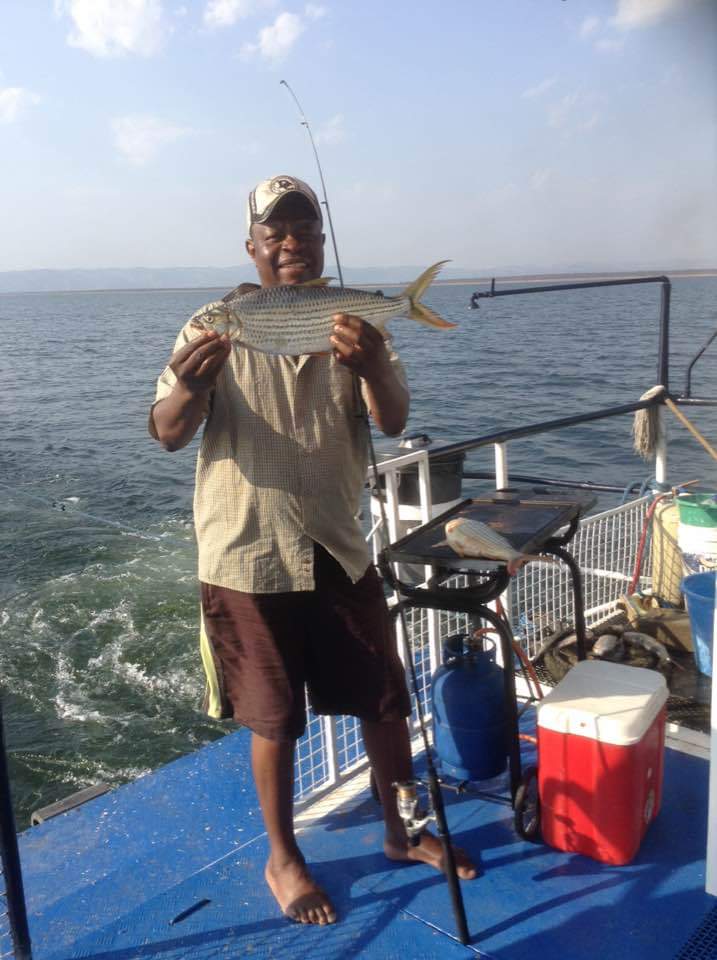
When he forcefully jerked his fishing rod to try and get his hook off the obstacle, suddenly his line started moving again, but this time he could feel that there was massive force behind it. He quickly adjusted his drag so that his line would not break, believing he had hit a massive babel.
Realising what was happening, our skipper (boat driver) quickly removed the anchor and soon the boat was being pulled in the direction of the line. From the slow but forceful pull and the continuous sound of the drag, Tsvangirayi jockingly quipped that he had caught a crocodile. A few seconds later he was proved right when a crocodile’s head appeared above the water, shaking as it tried to get rid of the hook.
Tsvangirayi wanted to cut the line immediately, but the majority of the curious fishermen urged him not to. Realising that it was in hot soup, the crocodile changed direction and headed towards a head of hippos. The croc started causing commotion among the hippos, and the angry hippo bull looked at us with a gaping mouth. At that moment we all agreed that Tsvangirayi should cut his line.
We generally agreed that the crocodile had been caught after snatching a fish which had been caught on Tsvangirayi’s line.
Tsvangirayi had just become the second person I had witnessed pulling a crocodile on his line, after my other fishing friend Andrew had done so at Arabi dam in Limpopo province, South Africa. This was certainly the highlight of the trip and we soon retreated to our boat for some awesome food and drink. I must say the chef on this boat was excellent, so was the beer, the wine and the whiskey.
 Let's Go Fishing